

Infections were responsible for an estimated 2.3 million new cancer cases worldwide in 2024, according to an analysis led by the International Agency for Research on Cancer (IARC), the World Health Organization’s cancer agency.1 This represents around 12% of all new cancer diagnoses globally.
Published in The Lancet Oncology, the study assessed cancers associated with 12 infectious agents classified as Group 1 carcinogens.2 Using GLOBOCAN 2024 data, researchers estimated the proportion, number and age-standardised incidence of infection-attributable cancers by sex, age and country.
Five pathogens accounted for most infection-related cancers. Helicobacter pylori, a bacterium that infects the stomach, was linked to around 760,000 cases, followed by human papillomavirus (HPV) with approximately 750,000 cases. Hepatitis B virus was associated with 360,000 cases, while Epstein–Barr virus (EBV) and hepatitis C virus were linked to around 260,000 and 160,000, respectively.
Together, these infections can contribute to more than 20 cancer types, including stomach, liver, cervical and blood cancers. HPV alone can cause eight cancer types, and virtually all cervical cancers are attributable to the virus.
Infection-associated carcinogenesis is a multistep process involving disrupted cell-cycle control, genomic instability, chronic inflammation and impaired immune surveillance.3 Together, these effects can enable altered cells to survive, proliferate and progress towards malignancy.
Some oncogenic viruses act directly by interfering with tumour-suppressor pathways. High-risk HPV is a well-characterised example.4 Its E6 protein promotes the degradation of p53, weakening the cellular response to DNA damage, while E7 inactivates the retinoblastoma protein, releasing cell-cycle controls and driving infected cells into the DNA-synthesis phase. This allows cells with damaged DNA to continue dividing rather than undergoing cell-cycle arrest or apoptosis. Infections can also impair immune surveillance. HIV-associated loss and dysfunction of CD4+ T cells reduce immune control of oncogenic pathogens, allowing them to persist or reactivate.5
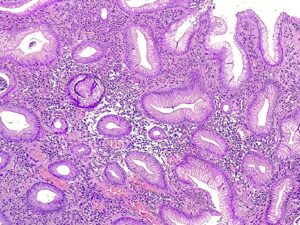
Bacteria and parasites more commonly act through chronic inflammation.6 Persistent immune activation exposes tissues to inflammatory cytokines and reactive oxygen and nitrogen species, which can damage DNA and stimulate compensatory proliferation. Repeated cycles of injury and repair increase the likelihood of replication errors and oncogenic mutations. Chronic Helicobacter pylori infection, for example, can drive progressive changes in the gastric mucosa from chronic gastritis and gland loss to intestinal metaplasia and dysplasia.7
These mechanisms often overlap, with a single pathogen affecting cellular signalling, immune evasion and inflammation. However, infection alone is rarely sufficient to cause cancer. Malignant transformation typically requires persistent infection, and contributing genetic, immunological or environmental factors. Importantly, most people infected with a cancer-associated pathogen do not develop cancer.
The findings reinforce the importance of infection control in cancer prevention. Vaccination against HPV and hepatitis B, screening for HPV-related precancerous lesions, testing and treatment for H. pylori, HIV and viral hepatitis, safer injection practices, and HIV pre-exposure prophylaxis can all help reduce risk.
However, the burden remains unevenly distributed. Low- and middle-income countries accounted for around three-quarters of infection-attributable cancers. Eastern Asia recorded the largest absolute number, with approximately 990,000 cases, while sub-Saharan Africa had the highest regional proportion and an age-standardised incidence rate above the global average.
These inequalities reflect differences in access to vaccination, screening, diagnosis and treatment. Expanding proven interventions, alongside investment in new prevention tools for infections such as EBV, could substantially reduce a major and preventable component of the global cancer burden.
Alongside access to prevention and treatment, the host immune response helps determine whether an infection is controlled or persists. Most people carry EBV without developing disease because virus-specific CD4+ and CD8+ T cells suppress viral reactivation; severe loss of this control increases the risk of EBV-associated lymphomas.8 Strong pathogen-specific T cell responses are also associated with clearance of HPV and hepatitis B virus, whereas weak or exhausted responses can contribute to chronic infection.9,10 Understanding these differences in immune control may help explain why some people clear cancer-associated infections while others develop persistent infection and face a greater long-term risk.
Investigating these differences requires tools that can characterise pathogen-specific cellular immune responses and clarify the factors associated with infection clearance, persistence and cancer development. To support this research, Virax Biolabs offers peptide pools for the five leading cancer-associated pathogens identified in the analysis:
Helicobacter pylori
HPV 16 and HPV 18
Hepatitis B virus
Epstein–Barr virus
Hepatitis C virus
By stimulating pathogen-specific immune cells in vitro, these tools can help researchers investigate cellular immune responses, compare immune recognition across patient groups and support studies of infection, persistence and cancer development.
References